Are Male Enhancement Pills Legit? Weighing the Research
The category is neither a uniform scam nor a settled science. Sorting it requires separating three different questions that the word “legit” usually collapses into one.
Quick answer
Partly. Several ingredients used in male vitality formulas have real mechanisms and published human trials behind them — Panax ginseng and L-citrulline most of all — but the marketing consistently claims more than those trials support. No supplement has evidence for size change, permanence, or treating any medical condition, and most products do not disclose the doses that would let you compare them with the research at all.
- Real: the nitric-oxide mechanism behind L-citrulline is well described.
- Overstated: trials are small, short and usually self-reported.
- Unsupported: enlargement, permanence, and any cure or treatment claim.
When someone types are male enhancement pills legit into a search box, they are usually asking a compressed version of three separate questions, and the answers to those three questions are genuinely different. Untangling them is most of the work.
The first is whether the product contains what the label says. The second is whether the ingredients, at the amounts used, do anything measurable in humans. The third is whether the specific claim on the sales page matches the answer to the second. A product can pass the first, half-pass the second and fail the third comprehensively, which is roughly where this whole category sits.
1. Question one: does it contain what it says?
This is a manufacturing and honesty question rather than a science question, and for mainstream bottled supplements the answer is usually yes with a caveat. Dietary supplements are regulated as food rather than as medicines, so nobody approves the formula before it goes on sale. Manufacturers are required to follow Good Manufacturing Practice, and facility registration and GMP certification speak to the plant rather than to the product.
The category where this question fails badly is the unlabelled counter pill, which we cover separately in our piece on what regulators keep finding in gas-station pills. For a bottled product with a printed panel, the more common failure is not contamination but vagueness: a proprietary blend total that tells you nothing about the split.
2. Are male enhancement pills legit by the evidence ladder?
Scientific support is not binary, and the phrase “clinically studied” on a label can mean any of five very different things. The ladder runs roughly like this.
- Plausible mechanism. A biochemical pathway exists on paper. This is the weakest rung and the one most often quoted as if it were the strongest.
- Cell or animal work. Something happens in a dish or a rodent. Useful for direction, close to useless for predicting a human outcome.
- Small human trial. Twenty to eighty people, eight to twelve weeks, usually self-reported outcomes. This is where most botanical evidence in this category lives.
- Multiple independent trials. Several groups, different populations, results pointing the same way. Rare here.
- Pooled analysis across trials. Data combined and weighted, with heterogeneity and bias assessed. Rarer still, and where the honest conclusions get modest.
Almost everything sold in this space rests on rungs one to three. That is not fraud. It is early evidence, and describing early evidence as proof is where the legitimacy problem actually starts.
Compare on disclosure, not on adjectives
The ingredient list tells you what to research. The amounts tell you whether the product is in the same universe as the studies. When you are weighing the best male enhancement supplements on the market, the panel is the document that decides it — not the headline.
3. Grading the six ingredients this site covers
Here is our read on the six ingredients named by the formula we track, graded on how far up that ladder each one has actually climbed. The dose column reflects amounts commonly used in published studies; it is not a recommendation and not a statement about any product's contents.
| Ingredient | Highest rung reached | Study dose range | What was measured | Our grade |
|---|---|---|---|---|
| Panax Ginseng | Pooled analyses exist | 600–1000 mg extract | Questionnaire scores, fatigue | Moderate |
| L-Citrulline | Multiple trials, clear mechanism | 3–6 g daily | Blood-flow markers, exercise output | Moderate |
| Rhodiola | Several small trials | 200–600 mg extract | Fatigue and stress scales | Weak to moderate |
| L-Carnitine | Several small trials | 1–2 g daily | Energy metabolism markers | Weak |
| Maca Root | Small trials only | 1.5–3 g daily | Self-reported desire and energy | Weak |
| Grape Seed Extract | Mechanism plus small trials | 100–300 mg daily | Antioxidant and vascular markers | Weak, indirect |
Two moderates and four weaks. That is a fair description of the state of play, and it is a long way from both “proven” and “worthless”. Anyone telling you the category is one or the other has not read the papers.
4. Where the evidence is genuinely decent
Two ingredients deserve credit rather than dismissal.
Panax ginseng is the most-studied botanical in this space by a distance. Multiple controlled trials exist, several have been pooled, and the pooled conclusions are cautiously positive on questionnaire-based outcomes while flagging the poor quality of many individual studies. It is also the ingredient with the most documented interaction profile, which matters if you take anticoagulants or manage blood sugar — a reason to talk to a pharmacist, not a reason to panic.
L-citrulline has the cleanest mechanism of anything on the list. It is converted to arginine in the kidneys and raises nitric oxide more reliably than swallowing arginine directly, because arginine is largely destroyed on first pass through the liver. That pathway is not speculative. The caveat is the dose: the trials use gram-scale amounts, and a formula that does not publish milligrams cannot claim to be in that range.
5. Where the evidence is thin, and where it is absent
Maca is the clearest case of a reputation running ahead of its data. It is popular, it is traditional, and the human trials are small and rely on questionnaires. Importantly, they do not support the hormonal story that most marketing implies. Treat it as a wellbeing ingredient.
Rhodiola has the most plausible fatigue evidence of the adaptogens here, and simultaneously the most variable extracts — rosavin and salidroside content differ enormously between products, so two bottles at the same milligrams are not comparable. Carnitine's human results are modest and slow. Grape seed extract is genuinely studied for vascular and antioxidant markers, which is a step removed from the outcome anyone is buying it for.
And then the absent category. There is no published evidence that any oral supplement changes penile size, and no mechanism by which a nutrient could. Claims about growth, length or girth are unsupported at every dose and duration ever tested. We say the same thing in our piece on whether supplement effects are permanent, and it is worth repeating because it is the single most common false claim in the category.

6. Four design flaws that inflate almost every positive result
Understanding these four makes you a much better reader of any supplement claim.
- Small samples. Trials of thirty or forty people produce wide confidence intervals and are easily swayed by a handful of enthusiastic responders.
- Short durations. Eight to twelve weeks is standard, which tells you nothing about a year of use.
- Self-reported outcomes. Questionnaire scores are the norm in this field. They are legitimate instruments and they are also highly responsive to expectation, which is why placebo arms in sexual-health trials often move substantially.
- Funding and publication bias. Industry-funded studies are more likely to report favourable results, and negative studies are less likely to be published at all.
A single positive trial is a reason to look further, not a reason to believe. The category's problem is not that the studies are fake; it is that early, small, self-reported findings get quoted as if they were settled.
7. What a genuinely credible product looks like on paper
Five things, and they are all checkable before you form any opinion about whether it works.
Amounts per ingredient rather than a blend total. Extract ratios and standardisation markers for every botanical, so you know the potency and not just the weight. Doses that land inside the ranges the published trials used. Structure and function claim language rather than disease claims. And independent testing of the finished product against its label, which is the one badge that would genuinely mean something and which most direct-to-consumer supplements do not carry.
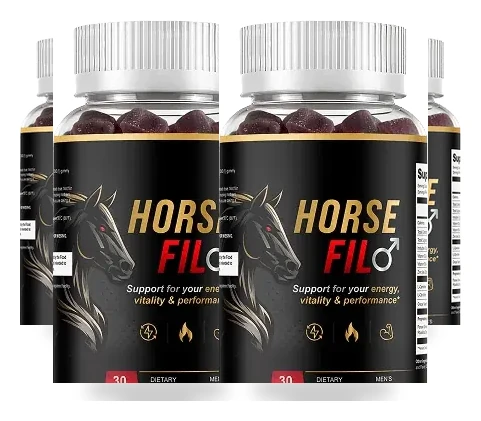
Very few products clear all five. The formula this site covers names its six ingredients and publishes no amounts, no ratios and no standardisation, which means it clears the claim-language test and fails the disclosure tests. We would rather write that sentence than pretend otherwise, and our guide to reading the panel when the bottle arrives exists precisely because the information only becomes available at that point.
8. What this analysis cannot tell you
We have not run a trial and we are not a laboratory. Our grading is a judgement about a body of published literature, and other careful readers could grade some of these rows differently.
We cannot tell you whether a specific bottle contains a research-relevant dose, because the amounts are not published. We cannot predict individual response, which varies widely in every trial we have read. And we cannot rule out that a combination of ingredients behaves differently from the sum of the single-ingredient studies — combination products are almost never tested as combinations, which is a real gap in the evidence rather than a point in anyone's favour.
Finally, none of this is medical advice. If erectile difficulty is the reason you are searching, it is a symptom that warrants a conversation with a clinician rather than a shopping decision, and we set out why in our note on what studies report about erectile function.
9. So, a verdict
So, are male enhancement pills legit? The fair answer depends on which of the three questions you meant, and it is different for each one.
The ingredients are real, the mechanisms for two of them are sound, the human evidence is early and modest, and the marketing is routinely several rungs ahead of the ladder. That combination makes the category worth understanding rather than worth dismissing, and it makes disclosure the only sensible basis for choosing between products.
If you are researching where to buy a testosterone booster or a vitality formula, pick the seller who publishes most, gives you a return window, and describes what the ingredient does rather than what it will do for you. Then verify the panel the day it arrives.
Frequently asked questions
Are male enhancement pills legit or a scam?
Neither label fits the whole category. Some ingredients have real mechanisms and published human trials behind them, particularly Panax ginseng and L-citrulline. The marketing around them routinely outruns that evidence, and any product promising size change or a permanent result is making a claim no study supports. Judge the specific ingredient and the disclosed dose, not the category.
Which male vitality ingredient has the strongest published evidence?
Panax ginseng has the largest body of controlled human trials among the botanicals commonly used, and L-citrulline has the clearest mechanism because it raises arginine and feeds nitric oxide production. Both bodies of evidence are still limited by small sample sizes and short durations. Neither supports a claim to treat any medical condition.
Why do supplement studies so often look positive?
Four design features inflate results across this literature: small numbers of participants, durations of eight to twelve weeks, outcomes measured by self-report questionnaires, and frequent industry funding. None of these makes a study worthless, but together they mean a single positive trial is a starting point rather than a conclusion. Pooled analyses across several trials are more informative.
What would make a supplement genuinely credible on paper?
Amounts disclosed per ingredient rather than as a proprietary blend total, extract ratios and standardisation markers for every botanical, doses that match what published trials used, structure and function claim language, and independent testing of the finished product. Very few direct-to-consumer supplements meet all five, which is worth knowing rather than panicking about.
References and further reading
- NIH National Center for Complementary and Integrative Health — Asian Ginseng
- NIH National Center for Complementary and Integrative Health — Rhodiola
- NIH Office of Dietary Supplements — Dietary Supplements for Exercise and Athletic Performance
- Harvard T.H. Chan School of Public Health — The Nutrition Source
- PubMed — controlled trials of maca (Lepidium meyenii)
We link to standing reference resources and to the literature itself rather than to a single trial, so you can check the current position rather than a snapshot that ages.