Ashwagandha Testosterone and Cortisol: What the Evidence Actually Shows
The most popular adaptogen on the shelf is sold on a testosterone headline but earns its evidence somewhere quieter. Here is the honest version of the ashwagandha story — stress, cortisol, sleep, and the modest hormonal footnote.
Does ashwagandha raise testosterone?
Sometimes, modestly, and mainly in men who are stressed or sleep-deprived. The ashwagandha testosterone effect in trials is small and inconsistent. Its strongest, most repeatable result is lowering cortisol, the stress hormone — and calming a chronically raised stress axis is the most plausible way it indirectly supports male vitality.
- Best evidence is for cortisol — several trials show real reductions in stress markers over about eight weeks.
- Testosterone changes are small and concentrated in stressed or overweight men, not the already-rested.
- Standardised dose matters — studies use KSM-66 root extract at 300 to 600 mg daily.
Ashwagandha is the ingredient most likely to be sold on a headline it only half deserves. Search for ashwagandha testosterone and you will find pages promising a hormonal transformation, when the published human research tells a more careful and, frankly, more interesting story: this ancient adaptogen earns most of its evidence not by pushing testosterone up but by pulling cortisol down. Get that relationship the right way round and everything else about the ingredient makes sense.
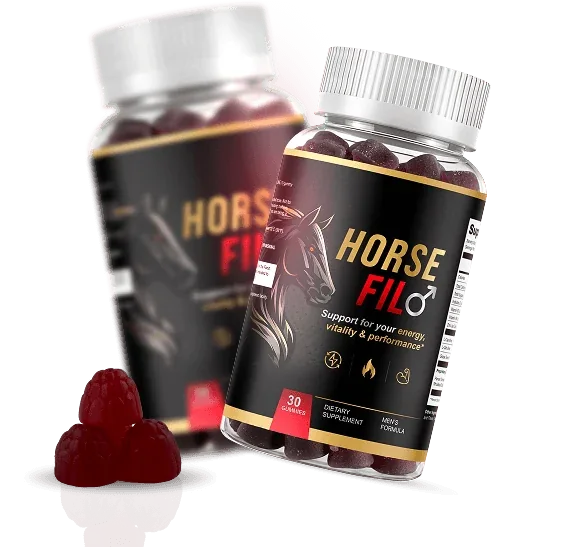
This explainer stays inside what the trials show. We will walk the stress-and-cortisol pathway in plain language, look honestly at the testosterone data including where it is weak, give you the dose numbers the research actually used, and set a realistic timeline. Then we will place ashwagandha where it belongs — as one lever in the wider adaptogen category that formulas like HorseFil are built around — without overstating what any single herb can do.
1. The cortisol pathway, in plain language
Your body runs a stress-response system called the HPA axis — hypothalamus, pituitary, adrenal glands. When it fires, the adrenals release cortisol, which is exactly what you want in a genuine emergency: it mobilises energy, sharpens focus and pauses lower-priority functions. The problem is modern life, which keeps the alarm half-on. Deadlines, poor sleep and constant low-grade pressure can leave cortisol chronically elevated, and chronically elevated cortisol is where the trouble starts.
That matters for men specifically because cortisol and testosterone sit at opposite ends of a see-saw. When the body is prioritising the stress response, it deprioritises the reproductive and building-up hormones, testosterone among them. Persistently high cortisol also wrecks sleep, and since much of the day's testosterone is produced during deep sleep, the two effects compound. This is the mechanism ashwagandha plausibly acts on: not a direct hormonal push, but taking a foot off the stress pedal so the see-saw can settle.
Framing it this way also explains why the same man can get very different results at different times. Take ashwagandha during a calm, well-slept stretch and there is little suppression to relieve, so little happens. Take it during a punishing period of deadlines and broken sleep and the same capsule has real work to do. The ingredient did not change — your cortisol did — and that context is the quiet variable most reviews of ashwagandha completely ignore.
Ashwagandha's headline is testosterone. Its best evidence is cortisol. The two are connected, but selling the first while proving the second is exactly how expectations get set too high.
2. What the ashwagandha testosterone trials really found
Now the part the marketing skips. Several randomised, placebo-controlled trials have measured testosterone after ashwagandha supplementation, and a few report statistically significant increases. Read the fine print and a pattern appears: the effect shows up most in men who were stressed, sleep-deprived, overweight or physically training hard — in other words, men whose cortisol was likely elevated to begin with. In already-rested, healthy men, the hormonal needle barely moves.
The effect sizes are also modest, the trials are generally short, and several are small or funded by ingredient suppliers, which is a reason for caution rather than dismissal. The fair summary is this: ashwagandha may nudge testosterone upward in men whose stress was suppressing it, by relieving that suppression, rather than acting as a direct hormonal stimulant. That is a real benefit for the right person and a much smaller promise than "raises testosterone" printed on a tub. This is the same gap between marketing and literature we trace across the category in our piece on how male-enhancement claims compare with published research.

3. Where the evidence is genuinely strong: cortisol and stress
If you flip the question from "does it raise testosterone" to "does it lower cortisol", the evidence gets noticeably firmer. Multiple randomised trials in chronically stressed adults report meaningful reductions in serum cortisol alongside improvements in validated stress and anxiety questionnaires, typically over an eight-week course. Sleep quality tends to improve in the same studies, which is mechanistically consistent — lower stress, better sleep, and better sleep feeding back into a calmer stress axis.
For a lot of men, that is the outcome that actually matters. Feeling less wired, sleeping more deeply and recovering better is a genuine quality-of-life shift, and it is one an adaptogen can plausibly deliver. Notice that none of it requires a testosterone claim to be worth having. The stress benefit stands on its own two feet, which is more than can be said for the hormonal headline.
Want the adaptogen pillar without guesswork?
HorseFil builds its stress-and-vitality support around rhodiola and maca rather than asking you to assemble single herbs yourself. If you would rather run one disclosed, GMP-made formula for a proper eight-week trial, the official store shows the current panel, guarantee and pricing.
4. How much ashwagandha, and in what form
Dose and form are where a lot of bottles quietly fail. The human trials almost all use a standardised root extract — most commonly the KSM-66 form — at three hundred to six hundred milligrams a day, frequently split into a morning and evening dose and taken with food. Two details do the heavy lifting: it should be the root rather than a cheaper leaf-heavy extract, and it should carry a standardisation figure (usually a percentage of withanolides, the active compounds) so you know it resembles the material used in research.
More is not better here. Pushing well past six hundred milligrams has not reliably produced larger effects in the published work, and adaptogens are cumulative rather than acute, so the amount matters less than taking a sensible dose consistently. This is exactly why a proprietary blend is a problem: if the label only shows a combined weight, you cannot tell whether the ashwagandha inside is a research dose or a sprinkle for the marketing. Our guide to reading a Supplement Facts panel covers how to spot that trick before you pay.
5. A realistic timeline: think weeks, not days
Adaptogens do not announce themselves. Because ashwagandha works by gradually recalibrating the stress axis, the trials that show benefit run for roughly eight weeks, and the meaningful changes — calmer baseline, steadier energy, deeper sleep — tend to build across that window rather than appear overnight. If you take it for five days and feel nothing, that is not a failure of the herb; it is the timeline working as expected.
Set the experiment up to be fair. Commit to about two months, keep your dose and your routine steady, and judge the result against a note you wrote at the start describing your sleep, stress and energy — not against a vague memory. Retrospective judgement of a subjective outcome is unreliable in both directions, which is one reason the earliest weeks of any adaptogen feel underwhelming even when something real is happening underneath.
6. Safety, tolerance and who should be careful
Ashwagandha is generally well tolerated in the trials, with mild digestive upset or drowsiness as the most common complaints. That said, "well tolerated" is not "for everyone". It can influence thyroid hormone levels, so anyone with a thyroid condition or on thyroid medication should get medical advice first. It can add to the effect of sedatives and may lower blood sugar, so it deserves care with diabetes, sleep or anxiety medication. Because it may stimulate the immune system, people on immune-modulating drugs, and anyone pregnant, should avoid it unless a clinician says otherwise.
These are not reasons to fear the ingredient; they are reasons to treat it as an active compound rather than a snack. The rule that protects you is the same one that applies to the whole category: bring the actual label to a pharmacist or doctor if you take any regular medication, and let them check the interactions against the specific amounts.
7. Ashwagandha as one pillar, not the whole roof
Step back and the sensible way to think about ashwagandha becomes clear. It is one adaptogen among several, its real strength is stress and cortisol, and its testosterone effect is a conditional bonus for men whose stress was in the way. That is a useful pillar — but a pillar, not a roof.
This is where an adaptogen-led formula makes sense over chasing single herbs. HorseFil covers the same stress-and-vitality pillar through rhodiola and maca, both of which act on fatigue and the stress response, and pairs them with circulation-support ingredients like L-citrulline and Panax ginseng so the formula addresses energy from more than one angle. If you specifically want ashwagandha in the mix, you can stack a standardised KSM-66 product alongside — just check the labels first, because an adaptogen-on-adaptogen overlap adds cost faster than it adds benefit. For the broader menu of levers that actually move the needle, our overview of natural ways to increase testosterone puts sleep, training and nutrition where they belong: ahead of any single capsule.
8. Ashwagandha versus the other adaptogens
Ashwagandha rarely acts alone in a real formula, so it helps to know how it compares with the adaptogens it usually shares a shelf with. They overlap in purpose — helping the body cope with stress — but they lean in different directions, and the differences are the reason a formula might choose one over another.
- Ashwagandha leans calming and downshifting. Its strongest data is on lowering cortisol and easing anxiety, and several users find it mildly sedating, which is why an evening dose and better sleep are common themes in the trials.
- Rhodiola leans activating and anti-fatigue. The research clusters around mental and physical fatigue and stamina under stress, and it tends to be taken earlier in the day. This is the adaptogen HorseFil uses, which suits a formula aimed at daytime energy and vitality rather than sedation.
- Panax ginseng, also in the HorseFil formula, sits somewhere between the two: studied for energy, fatigue and questionnaire-based vitality outcomes, with the largest overall evidence base of the common botanicals in this space.
The practical lesson is that "adaptogen" is a category, not a single effect, and matching the herb to what you actually want matters. If your problem is a wired, anxious, poor-sleeping baseline, ashwagandha is the sensible lead. If it is daytime flatness and low stamina, a rhodiola-and-ginseng formula is a better fit — which is precisely the profile HorseFil is built around. Reaching for the fashionable name rather than the fitting one is how a lot of men end up disappointed by an ingredient that was working exactly as intended, just on a different problem from theirs.
The honest takeaway
Ashwagandha is a good ingredient sold on the wrong headline. Its testosterone effect is small, conditional and concentrated in stressed men; its cortisol and stress effect is real, repeatable and worth having on its own terms. Use the standardised KSM-66 root at three hundred to six hundred milligrams, give it eight weeks, respect the thyroid and sedative cautions, and treat it as one calm lever on the stress axis rather than a hormonal shortcut. Judged that way — as an adaptogen doing adaptogen work — it holds up. Judged as a testosterone booster, it was always going to disappoint, because that was never quite what the evidence said.
Frequently asked questions
Does ashwagandha raise testosterone?
The honest answer is a small, conditional maybe. Several controlled trials in stressed, sleep-deprived or overweight men report modest increases in testosterone after supplementation, but the effect sizes are small, the studies are relatively short, and men who are already rested and healthy tend to see little. The most consistent finding is not a testosterone surge but a reduction in cortisol, which is a stress hormone rather than a sex hormone.
How much ashwagandha should I take?
Most human trials use a standardised root extract, commonly the KSM-66 form, at three hundred to six hundred milligrams a day, often split into two doses and taken with food. Higher amounts have not reliably produced better results in the published research. As with any adaptogen, consistency over about eight weeks matters more than a large single dose, and you should confirm the amount and standardisation on the label rather than trusting a blend.
Does ashwagandha lower cortisol?
This is ashwagandha's best-supported effect. Multiple randomised trials in chronically stressed adults report meaningful reductions in serum cortisol and in self-reported stress and anxiety scores over roughly eight weeks. Because chronically high cortisol can suppress testosterone and disrupt sleep, calming the stress axis is the most plausible route by which ashwagandha indirectly supports vitality, rather than acting directly on the testes.
Can I take ashwagandha with a testosterone booster?
Often yes, but check the labels and a professional first. Many vitality formulas already contain an adaptogen, such as rhodiola, so adding standalone ashwagandha can overlap without adding much. If you take thyroid, sedative, blood-sugar or immune-modulating medication, or have a thyroid condition, clear it with a pharmacist or doctor, since ashwagandha can influence thyroid hormones and enhance sedation.
References and further reading
- NIH National Center for Complementary and Integrative Health — Ashwagandha
- NIH Office of Dietary Supplements — ingredient fact sheets
- PubMed — randomised trials of ashwagandha and cortisol
- PubMed — ashwagandha and testosterone in men
- Harvard Health Publishing — Men's Health topic library
We link to standing reference resources and to the primary literature rather than to a single trial, so you can check the current position rather than a snapshot that ages.