Natural Testosterone Booster: What to Look For
"Natural" is the most reassuring word in the supplement aisle and the least regulated. This guide shows you the label tells that separate a genuinely natural, clinically dosed testosterone booster from a filler-packed blend hiding behind a leaf on the front.

What does a natural testosterone booster actually mean?
Legally, almost nothing — "natural" is not a regulated term on a supplement label. A genuinely natural testosterone booster relies on standardized botanical extracts and nutrients with disclosed milligrams, not synthetic hormones or hidden proprietary blends. The word on the front is marketing; the panel on the back is the evidence.
- Read the panel, not the front. Look for named ingredients with individual milligram amounts.
- Standardized extracts such as Tongkat Ali and ashwagandha are measured; vague "root powder" is not.
- Proprietary blends hide dose. If amounts are pooled into one number, you cannot judge the formula.
Almost every product in this aisle now calls itself a natural testosterone booster, and the word does a lot of quiet emotional work. It suggests gentle, safe, plant-based, close to food. What it almost never does is describe anything measurable, because "natural" carries no legal definition on a supplement label in the United States. A synthetic-free label and a bottle of underdosed filler can wear the exact same word.
That gap between the reassurance and the regulation is where buyers get caught. So rather than argue about what "natural" should mean, this guide gives you the concrete label tells that actually separate a transparent, clinically dosed formula from a marketing exercise — the same lens we apply to the formula this site covers, gaps included.
1. Why "natural" tells you almost nothing on its own
Start with what the word does not guarantee. It does not mean the ingredients are unprocessed — every capsule extract is processed. It does not mean they are low-dose or gentle; some botanicals are pharmacologically active. It does not mean the product is free of contaminants, and it certainly does not mean the doses match any research. A label can say "100% natural" while pairing a trace of a headline botanical with a bulk of cheap rice flour.
The useful reframe is this: treat "natural" as a starting expectation, not a verdict. A genuinely natural testosterone booster should be built from recognisable botanical extracts and essential nutrients, disclosed by name and amount, made somewhere you can identify, and tested by someone other than the brand. Every one of those is checkable on the label or the product page. The word "natural" is not.
"Natural" is a feeling the front label sells you. The back label is where you find out whether the feeling is earned. Buy on the back.
2. Label tell one: disclosed milligrams, ingredient by ingredient
The most important thing on any natural testosterone booster is not an ingredient — it is a number. For every active in the formula, the panel should print an individual milligram amount. This is what lets you check the dose against the research, and it is the single fastest way to sort a serious product from a decorative one.
Here is why it matters so much. The ingredients with real human evidence have dose ranges the studies actually used, and below those ranges the evidence simply does not apply. A formula that names the right botanical but will not tell you how much it contains is asking you to assume the best. The disclosed-dose formulas are making a harder, more honest promise, and that willingness to be checked is itself a quality signal. Our companion 2026 testosterone booster buyer's guide walks through the full set of purchase filters if you want the wider framework.
3. Label tell two: standardized extracts, not vague "powders"
Two labels can both say "Tongkat Ali 200 mg" and mean very different things. One might be a standardized extract with a stated active-compound content; the other might be 200 mg of raw root powder of unknown strength. Standardization is the manufacturing step that measures the active constituents so the dose is reproducible — it is the difference between a known quantity and a hopeful one.
On the label, look for phrases such as "standardized to," a named branded extract, or a ratio like "10:1." For ashwagandha, well-characterised standardized extracts are the ones that appear most often in trials. For Tongkat Ali, standardization to its signature compound is what connects a capsule to the research. If a botanical appears with no standardization language at all, treat its stated milligram figure with caution, because you do not know how much of the active you are actually getting.
| Natural ingredient | Look for on the label | Study dose range | Evidence note |
|---|---|---|---|
| Tongkat Ali | Standardized extract, stated ratio | 200–400 mg | Strongest botanical evidence |
| Ashwagandha | Named standardized extract | 300–600 mg | Several supportive RCTs |
| Vitamin D3 | IU clearly stated | 3000–5000 IU | Helps mainly if you are low |
| Zinc | Elemental amount stated | ~30 mg | Helps mainly if you are low |
| Tribulus | Often a filler here | — | 2014 review: no T increase |
4. Label tell three: no proprietary blend hiding the amounts
The proprietary blend is the natural-booster world's favourite hiding place. Instead of listing each ingredient's milligrams, it groups them under one combined weight with a proprietary-sounding name. The front of the bottle can then name every impressive botanical while the back reveals none of their doses. It is legal, it is common, and in this category it is almost always a way to disguise underdosing.
The tell is easy to spot once you know it. If you see a single milligram figure followed by a bracketed list of ingredients, that is a blend, and you cannot verify a single dose inside it. A transparent natural testosterone booster breaks the blend open and prints each amount, because it has nothing to hide. When you are comparing two products and one uses a blend, the comparison is effectively over.
Put a real label to the test
The fastest way to make this concrete is to read an actual panel and price rather than a marketing page. Take the three label tells — disclosed milligrams, standardized extracts and no proprietary blend — to the official store and see how the formula holds up before you decide.
5. Label tell four: manufacturing and third-party testing
"Natural" says nothing about how a product is made or whether the bottle matches its label. Two signals close that gap. GMP (Good Manufacturing Practice) registration means the facility follows documented quality procedures. Third-party testing means an independent lab has verified identity, potency and purity, and — crucially in this category — screened for undeclared pharmaceutical adulterants.
That last point is where "natural" becomes genuinely important rather than decorative. Regulators regularly find products marketed as herbal male-vitality aids spiked with hidden prescription drug ingredients, which is exactly the opposite of natural and can be dangerous for anyone on nitrates or blood-pressure medication. We document how that happens in our report on what regulators find in counter-sold pills. A GMP facility plus third-party verification is the floor that makes the word "natural" mean something.
6. Objection: "isn't natural automatically safe?"
This is the most common and the most costly assumption in the aisle. Natural does not mean inert. Botanicals can be pharmacologically active, they can interact with medication, and their quality varies enormously between manufacturers. Panax ginseng, for instance, has documented interactions with anticoagulants and can affect blood sugar; anything that influences blood-vessel tone deserves care alongside nitrates or blood-pressure drugs.
None of that makes natural ingredients dangerous — the well-studied ones are generally well tolerated at research doses. It makes them real, which is the point. Treat a natural testosterone booster as an active product: read the interactions, buy the tested version, and clear it with a pharmacist or doctor before you start if you take any medication. "Natural" is a reason to check, not a reason to skip checking.
7. Objection: "can a natural booster replace testosterone therapy?"
No, and this is the boundary that matters most. Testosterone replacement therapy is a prescribed medical treatment for diagnosed low testosterone, delivered and monitored by a clinician. A natural testosterone booster is a dietary supplement marketed around energy, stamina and drive. No supplement is a substitute for a medical treatment, and no compliant supplement claims to treat, cure or reverse low testosterone, because that is a diagnosable condition.
If your energy, mood or drive has genuinely shifted, the honest first move is a blood test, not a bottle. A real measurement can distinguish a lifestyle dip from clinically low testosterone and point to causes a capsule cannot touch. A natural booster, if you and your clinician are comfortable with it, is an optional support layer on top of that plan — never a replacement for it. Our overview of natural ways to support healthy testosterone covers the sleep, training and nutrition levers that do the heavy lifting.
8. How the formula this site covers reads on the label
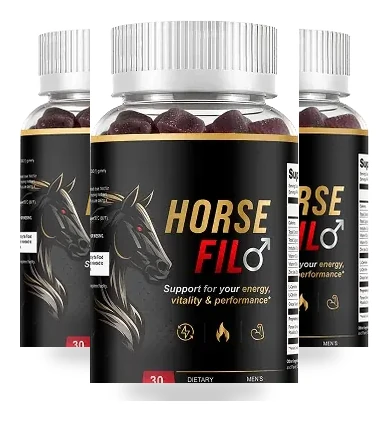
Held to its own four tells, HorseFil's formula is an honest mixed picture, and we would rather show you that than gloss it. It is a genuinely botanical, vitality-style blend — Panax ginseng, maca root, rhodiola, L-citrulline, L-carnitine and grape seed extract — so the "natural" description is fair in the plain sense of plant- and nutrient-derived. It is built around energy, stamina and blood-flow research rather than a Tongkat-Ali-and-ashwagandha testosterone stack, which is worth knowing if direct testosterone data is your priority.
On manufacturing it points to GMP-registered, US-based production, which clears the safety floor. On disclosed dosing it is weaker: like most products in the space, it does not publish a full per-ingredient milligram breakdown, so we cannot confirm any single component sits in its study range. That is a transparency gap, we name it as one, and if disclosed milligrams are your deciding tell you should read the live panel yourself and weigh it against the price and guarantee before buying.
9. Your natural-booster label checklist
Reduce the whole guide to a routine you can run on any bottle in a couple of minutes:
- Ignore the front-label "natural" claim and turn straight to the Supplement Facts panel.
- Confirm each active has its own milligram figure — no pooled proprietary blend.
- Check the doses against the research: Tongkat Ali 200–400 mg, ashwagandha 300–600 mg, and skip tribulus-led formulas.
- Look for "standardized" and a named or ratioed extract.
- Find the GMP and third-party testing note.
- Talk to a clinician — and get a blood test — before assuming a supplement is the answer.
A natural testosterone booster worth your money is not the one that says "natural" the most times. It is the one that shows you the milligrams, names the extracts, opens the blend, and stands behind independent testing. Everything else is a leaf printed on a label. For a fuller pre-purchase walkthrough, read how to read a Supplement Facts panel before you buy.
Check the panel, price and guarantee for yourself
You have the label tells — now use them on a live product rather than a "natural" banner. Confirm the current panel, the return window and the multi-month cost on the official store before you commit.
Frequently asked questions
What does a natural testosterone booster actually mean?
Legally, almost nothing. The word natural is not a regulated term on a supplement label, so it does not guarantee the ingredients are plant-derived, unprocessed or clinically dosed. In practice a genuinely natural testosterone booster relies on botanical extracts and nutrients such as Tongkat Ali, ashwagandha, vitamin D and zinc, disclosed by name and milligram, rather than on synthetic hormones or hidden proprietary blends.
Are natural testosterone boosters safe?
The well-studied ingredients are generally well tolerated at the doses used in research, but natural does not mean risk-free. Botanicals can interact with prescription medication, quality varies between manufacturers, and adulteration with undeclared drug ingredients is a real problem in this category. Choose products made in a GMP-registered facility with third-party testing, and speak to a pharmacist or doctor before starting, especially if you take medication.
Which natural ingredients have real evidence?
The strongest human evidence sits with Tongkat Ali at 200 to 400 milligrams of a standardized extract and ashwagandha at 300 to 600 milligrams. Vitamin D at 3000 to 5000 IU and zinc at around 30 milligrams help mainly when a person is genuinely deficient. Tribulus, despite being common, was found in a 2014 review not to raise testosterone.
Can a natural booster replace TRT?
No. Testosterone replacement therapy is a prescribed medical treatment for diagnosed low testosterone, and no dietary supplement is a substitute for it or a treatment for any medical condition. A natural booster is a support product marketed around energy, stamina and drive. If you suspect clinically low testosterone, the correct step is a blood test and a clinician, not a supplement.
References and further reading
- U.S. Food and Drug Administration — the use of the term "natural" in labeling
- NIH Office of Dietary Supplements — ingredient fact sheets (vitamin D, zinc and more)
- NIH National Center for Complementary and Integrative Health — dietary and herbal supplements
- PubMed — randomised trials of ashwagandha and testosterone
- Harvard Health Publishing — Men's Health topic library
We link to standing reference resources and to the literature itself rather than to a single trial, so you can check the current position rather than a snapshot that ages.