Best Testosterone Booster 2026: A Buyer's Guide
Most "best of" lists in this category rank on marketing spend, not evidence. This one flips the criteria: clinically dosed ingredients, disclosed milligrams and third-party testing first, headlines last. Here is how to shortlist a booster you can actually stand behind.
What makes a testosterone booster the best in 2026?
The best testosterone booster in 2026 is not the loudest one — it is the one you can verify. Favour formulas with clinically dosed, standardized ingredients, disclosed milligrams instead of proprietary blends, and third-party or GMP testing. Skip anything leaning on tribulus or hidden-dose blends, and talk to a clinician before you buy.
- Dose beats hype. The right milligrams of the right extract matter more than a long ingredient list.
- Evidence-first ingredients: Tongkat Ali, ashwagandha, vitamin D and zinc have the strongest human data.
- Transparency is the tie-breaker — disclosed amounts, GMP manufacturing and a real return window.
Type best testosterone booster into any search bar and you will get a wall of ranked lists, gold-medal badges and "our #1 pick for 2026" banners. Almost none of them tell you the criteria they ranked on, which is the single most important thing on the page. This guide does the opposite. Before we mention a product at all, we lay out the four filters a serious buyer should apply — and then we hold the formula this site covers to exactly the same standard, in public.
The reason to start with criteria rather than a winner is simple. The market is enormous, the claims are nearly identical from bottle to bottle, and the regulation is loose. A dietary supplement can say it "supports healthy testosterone" without ever having tested whether it does. So the useful question is not "which one is best?" but "what would make one worth buying, and does this label meet the bar?"
1. The uncomfortable data behind the "best testosterone booster" label
The most cited number in this space comes from a review by researchers at the USC Keck School of Medicine, which examined the ingredients and claims of a large sample of over-the-counter testosterone boosters. Roughly ninety percent of the products claimed to raise testosterone. Fewer than a quarter had any published data supporting that specific claim, and a meaningful share contained doses far below what studies had used, or listed ingredients with no human evidence at all.
Sit with that ratio for a moment. If nine in ten products make the headline claim and fewer than one in four can back it, then the badge on the label — "clinically proven," "#1 rated," "doctor formulated" — carries almost no information. The claim is table stakes. The evidence is the differentiator, and it is usually missing. That is why a buyer's guide worth reading spends its energy on what a formula discloses, not on what it promises.
Nearly every booster claims to raise testosterone. Fewer than a quarter can show data that it does. The claim tells you nothing; the label tells you everything.
2. Filter one: clinically dosed, standardized ingredients
The first filter separates ingredients with human evidence from ingredients with a nice story. A short list survives it, and each survivor has a dose range the research actually used. If a product contains the right ingredient at a fraction of that amount, it is borrowing the ingredient's reputation without earning it.
| Ingredient | Study dose range | What the research examined | Evidence strength |
|---|---|---|---|
| Tongkat Ali (Eurycoma) | 200–400 mg standardized extract | Testosterone markers, fatigue, stress | Strongest botanical evidence |
| Ashwagandha (KSM-66 / Sensoril) | 300–600 mg standardized extract | Testosterone, cortisol, stress scales | Moderate, several RCTs |
| Vitamin D3 | 3000–5000 IU daily | Testosterone in deficient men | Meaningful only if you are low |
| Zinc | ~30 mg daily | Testosterone in deficient men | Meaningful only if you are low |
| Tribulus terrestris | Varies widely | Testosterone markers | A 2014 review found no increase |
Two lessons fall straight out of that table. First, "standardized extract" is not a decorative phrase — it means the active compounds have been measured, so a 200 mg Tongkat Ali standardized to a set eurycomanone content is a known quantity, whereas "Tongkat Ali root powder" of unstated strength is not. Second, vitamin D and zinc are corrective, not additive: they help the man who is genuinely low and do little for the man who is already replete. A guide that promises they will push a healthy man's numbers up is overselling. We unpack the label-reading side of this in our companion piece on what a natural testosterone booster should show on its panel.

3. Filter two: no proprietary blends
A proprietary blend is a group of ingredients listed under one combined weight, so you see "Vitality Matrix 1,500 mg" instead of the milligrams of each component. It is legal, and it is the single most reliable red flag in the category. The reason manufacturers use it is rarely to protect a secret recipe — formulas in this space are not secret — and much more often to disguise how little of the expensive, clinically dosed ingredient is actually present, padding the blend with cheap fillers that make the total weight look impressive.
Here is the practical test. If a label proudly names Tongkat Ali and ashwagandha but buries them inside a blend, you cannot tell whether you are getting the 200–400 mg and 300–600 mg the studies used, or a sprinkle. The claim is intact; the dose is unknowable. A transparent label prints each active ingredient with its own milligram figure, and a buyer should treat that transparency as non-negotiable rather than as a bonus.
4. Filter three: third-party testing and GMP manufacturing
Even a well-designed formula is only as trustworthy as the facility that makes it and the lab that checks it. Two signals matter. GMP (Good Manufacturing Practice) registration means the facility follows documented quality and hygiene procedures. Third-party testing means an independent lab — not the brand — has verified identity, potency and purity, and screened for contaminants such as heavy metals and, in this category especially, undeclared pharmaceutical adulterants.
That second risk is not hypothetical. Regulators repeatedly find "herbal" male-vitality products spiked with unlabelled prescription drug ingredients, which is dangerous for anyone on nitrates or blood-pressure medication. We cover how that happens and how to protect yourself in our report on what regulators find in counter-sold pills. A product manufactured in a GMP-registered facility with third-party verification is not a guarantee of efficacy, but it is a floor of safety a serious buyer should refuse to go below.

Run the checklist on the formula this site covers
You now have the four filters — disclosed doses, no proprietary blend, GMP manufacturing and a real return window. The most useful next step is to apply them yourself to a live label and price rather than to a marketing page. Check the current panel, the guarantee and the multi-month cost on the official store before you decide.
5. Filter four: honest pricing and a real guarantee
Price is where marketing does its quietest work. A clinically relevant dose of a standardized extract costs the manufacturer real money, so an unusually cheap "high-strength" booster is often cheap because the strength is on the front label, not in the capsule. The flip side is equally true: an expensive bottle is not automatically better, and a premium price attached to a proprietary blend is the worst of both worlds.
Judge cost against disclosure. Work out the price per day at the dose you would actually take, compare a sustained multi-month supply rather than a single discounted first bottle, and read the refund window before you buy, not after. A confident manufacturer offers a genuine money-back guarantee because it expects most customers to keep buying; a thin guarantee with a restocking fee and a fourteen-day clock is telling you something. We break down the arithmetic in our guide to what a testosterone booster should cost per month.
6. What to avoid: the 2026 red-flag list
Filters tell you what to look for; a red-flag list tells you when to close the tab. In this category the warning signs are consistent from year to year, and 2026 is no different:
- Tribulus terrestris as the headline ingredient. A 2014 systematic review concluded it did not raise testosterone in men. Its persistence on labels is a marketing habit, not an evidence base.
- Proprietary blends that hide per-ingredient milligrams behind a combined weight.
- "Instant" or "overnight" language. The ingredients with real data work over weeks, not hours — anything promising a same-day transformation is selling a sensation, not a mechanism.
- Disease claims. Any product that says it treats, cures or reverses low testosterone is either breaking the rules or is not a compliant supplement. Low testosterone is a medical diagnosis.
- No manufacturing or testing information anywhere on the site or label.
- Fake urgency and invented "was" prices. Countdown timers that reset on refresh are theatre.
7. Where HorseFil fits — held to its own checklist
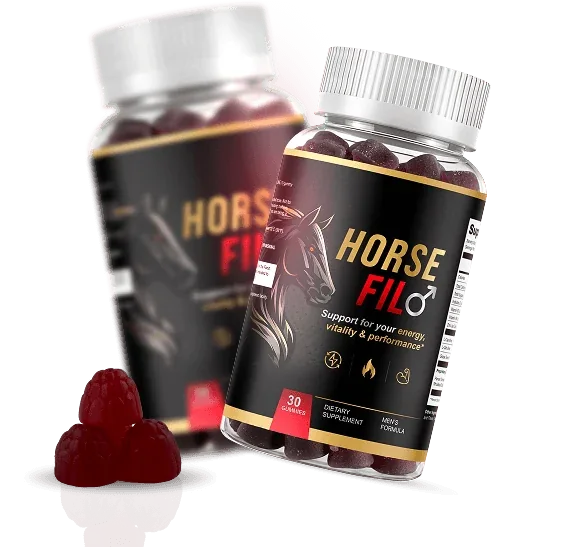
So how does the formula this site covers score against its own four filters? Honestly, and with the gaps named. HorseFil's ingredient list is a vitality-style blend built around Panax ginseng, maca root, rhodiola, L-citrulline, L-carnitine and grape seed extract — botanicals with published research on energy, stamina and blood-flow markers rather than a Tongkat-Ali-and-ashwagandha testosterone stack. That is a fair thing to know before you buy: it is positioned around vitality and drive, and it is not a like-for-like match to the two ingredients with the strongest direct testosterone data.
On manufacturing it points to GMP-registered, US-based production, which clears the safety floor from filter three. On transparency it is weaker: like most products in the space, it does not publish a full per-ingredient milligram breakdown, which means we cannot confirm whether any single component lands in the study range. We would rather state that plainly than wave it through, because the whole point of a buyer's guide is to apply the same scepticism to the product it covers. If disclosed dosing is your deciding factor, read the live panel yourself and weigh it against the price and the guarantee before committing.
8. A five-minute method for shortlisting any booster
Bring the whole guide down to a routine you can run on any bottle, in any tab, in five minutes:
- Scan the ingredient panel first. Are the actives named individually with milligrams, or hidden in a blend? A blend is a fast no.
- Check the doses against the table above. Tongkat Ali 200–400 mg, ashwagandha 300–600 mg, and skip anything built on tribulus.
- Look for "standardized." Standardized extracts are measured; powders of unstated strength are guesses.
- Find the manufacturing and testing note. GMP facility and third-party verification, or move on.
- Do the money maths. Cost per day at the real dose, multi-month price, and the actual refund window.
- Book the clinician conversation. If your energy, mood or drive has genuinely changed, that deserves a blood test, not just a supplement.
That last step is the one the ranked lists never include, and it is the most important. A persistent drop in drive or energy can have causes that no capsule addresses — and the value of a real testosterone measurement is that it turns a guess into a plan. A supplement, if you and your clinician are comfortable with it, is a small optional part of that plan, not a substitute for it. For the broader picture, our overview of how to buy testosterone supplements sensibly walks through the same logic in more depth.
9. The honest bottom line for 2026
There is no single best testosterone booster to crown, because "best" depends on what you are low in, what you are trying to support and what you can verify on the label in front of you. What there is — and what this guide gives you — is a durable set of filters that outlive any yearly ranking: clinically dosed and standardized ingredients, no proprietary blends, GMP manufacturing with third-party testing, and pricing you can defend to yourself.
Apply those filters and most of the market falls away, which is exactly the point. Hold the formula this site covers to the same standard, read its live label and price, and buy only what clears the bar. That is a slower answer than a gold medal, and it is the only one the evidence actually supports.
Ready to check a real label and price?
Take the four filters to a live product page rather than a "best of" list. Confirm the current panel, the guarantee and the multi-month cost on the official store before you commit to anything.
Frequently asked questions
What makes a testosterone booster the best in 2026?
The best testosterone booster in 2026 is the one you can verify rather than the one with the loudest promises. Look for clinically dosed, standardized ingredients with the milligrams printed on the panel, avoid proprietary blends that hide amounts, and prefer products made in a GMP-registered facility with third-party testing. The right amount matters more than the length of the ingredient list, and a clinician conversation comes before any purchase.
Do any testosterone boosters actually raise testosterone?
A USC Keck School of Medicine review found that roughly ninety percent of over-the-counter boosters claimed to raise testosterone, yet fewer than a quarter had data supporting the claim. A small number of ingredients, most notably Tongkat Ali and ashwagandha, have human trials showing modest changes in certain groups, and correcting a genuine vitamin D or zinc deficiency can help. Most products, however, cannot back their headline with evidence.
Which ingredients should a top booster contain?
The ingredients with the most human evidence are Tongkat Ali at roughly 200 to 400 milligrams of a standardized extract, ashwagandha at 300 to 600 milligrams, vitamin D at 3000 to 5000 IU where a person is low, and zinc at around 30 milligrams. These amounts should be disclosed individually. Tribulus is best avoided, since a 2014 review found it did not raise testosterone.
How much should a quality booster cost per month?
Price is a poor guide to quality on its own, but clinically relevant doses of standardized extracts cost the manufacturer real money, so an unusually cheap product often signals underdosing or a proprietary blend. Judge the monthly cost against what is actually disclosed on the panel, factor in the return window, and compare the sustained cost of a multi-month supply rather than a single introductory bottle.
References and further reading
- USC Keck School of Medicine — review of over-the-counter testosterone booster ingredients and claims
- NIH Office of Dietary Supplements — Vitamin D fact sheet
- NIH Office of Dietary Supplements — Zinc fact sheet
- PubMed — systematic reviews of Tribulus terrestris and testosterone
- U.S. Food and Drug Administration — consumer guidance on dietary supplements
We link to standing reference resources and to the literature itself rather than to a single trial, so you can check the current position rather than a snapshot that ages.