Testosterone Supplements for Men: A Practical Buyer Guide
The category is crowded, loud and mostly unverifiable. This is the short, honest checklist we wish every first-time buyer read before spending a cent — goals, ingredients, doses, testing and returns, in that order.
What should men look for in testosterone supplements?
Choose testosterone supplements for men by transparency, not by promises. Require a fully disclosed label with every dose shown, ingredients that match your goal, third-party testing, a money-back guarantee, and a real manufacturer. Then give it a fair eight-to-twelve-week trial before you decide it worked.
- Match the formula to your goal — energy, gym output or general vitality each point to different ingredients.
- Demand disclosed doses and lab testing — a proprietary blend hides the one number that matters.
- Expect a timeline, not a switch — most credible ingredients are studied over two to three months.
If you have started shopping for testosterone supplements for men, you have already met the problem: the shelf is enormous, every bottle sounds identical, and almost none of them give you the one thing you need to compare them fairly. This guide is a buyer's checklist, not a sales pitch. It walks through how to choose in the order that actually protects you — goal first, ingredients second, doses and testing third, price and returns last — and it names the parts of the category that do not survive scrutiny.
We should set the honest frame before anything else. A dietary supplement is not a hormone prescription and cannot be sold as a treatment for low testosterone or any medical condition. A review from the urology group at USC's Keck School of Medicine looked at the ingredients in popular over-the-counter testosterone boosters and found that fewer than a quarter had published human data supporting the claim that they raise testosterone at all. That single number should reshape how you read every label in this aisle: most of what is marketed as a booster is aspiration, not evidence. Your job as a buyer is to sort the small, checkable minority from the noise.
1. Start with the goal, not the bottle
Everyone in this aisle wants "more testosterone", but that phrase hides three very different goals, and the right formula depends on which one is actually yours.
- Daytime energy and drive. If your real complaint is an afternoon crash and low motivation, you are looking for adaptogens and circulation-support ingredients — rhodiola, Panax ginseng, maca — rather than anything hormonal.
- Gym output and recovery. If you train and want to hold onto strength and stamina, the useful evidence sits with L-citrulline for blood-flow markers and L-carnitine for energy metabolism, alongside the basics of sleep and protein.
- General vitality and libido. If it is a broad sense of flatness, the botanical vitality ingredients have the most (still modest) self-reported data, and expectations should be modest to match.
Naming the goal does two things. It tells you which ingredients are even relevant, and it gives you a way to judge the product later that is more honest than "do I feel like a new man". A formula built for stamina should be judged on stamina. Write your goal down before you buy, because a specific goal is the only fair scoreboard.
2. Read the ingredient list like a skeptic
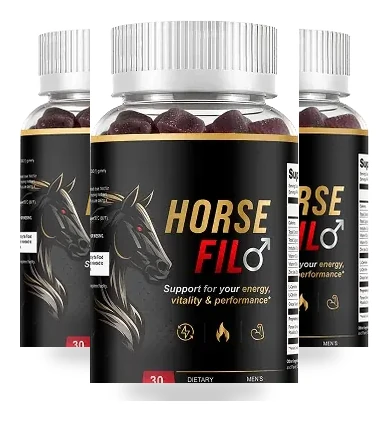
Once you know your goal, the ingredient panel is where a product earns or loses your trust. A short list of recognisable, food-derived ingredients that plausibly connect to your goal is worth more than a long list of exotic names chosen to look impressive. HorseFil, the formula this site covers, keeps to six well-known components — L-citrulline, L-carnitine, maca, Panax ginseng, rhodiola and grape seed extract — each of which has a real place in the men's-vitality literature rather than being there for decoration.
Be wary of three patterns. The first is the kitchen-sink label with twenty-plus ingredients, which usually means each one is present in a token amount. The second is the trademarked-name-as-evidence trick, where a branded ingredient is presented as if the brand were a clinical result. The third is the hormone-adjacent claim — anything implying the capsule directly raises your total testosterone into a specific range. That is a medical claim a compliant supplement cannot make, and a company willing to imply it is telling you how it treats the rest of the truth.

3. Disclosed doses are the whole game
Here is the single most useful rule in this guide: an ingredient you cannot see the dose of might as well not be on the label. "Proprietary blend 1,200 mg" tells you the combined weight of a handful of ingredients but not how much of any one of them you are getting, which means you cannot compare it to the amounts used in research. That is not an accident of formatting. It is a choice, and it usually protects the seller rather than you.
The published study ranges are not secret. L-citrulline is studied at roughly three to six grams a day; Panax ginseng extract at six hundred to a thousand milligrams; maca at one-and-a-half to three grams; rhodiola at two hundred to six hundred milligrams. A transparent label lets you hold the serving against those numbers and see whether it is in the same postcode or a rounding error. If you want a deeper walkthrough of that skill, our guide to reading a Supplement Facts panel before you buy shows exactly what to check, line by line.
Compare on what is disclosed, then decide
If you have worked through the checklist and want to see how HorseFil lines up on label, manufacturing and return terms, the official store shows the current panel, pricing and guarantee in one place — the details worth checking before any purchase.
4. Third-party testing and a real manufacturer
Doses tell you what should be in the bottle. Testing tells you what is. The men's-vitality category has a specific and well-documented hazard: products sold as "all natural" that are later found to contain undeclared prescription drug ingredients. That risk is concentrated in unbranded, single-serve formats bought from marketplaces and gas stations, and we cover how regulators find it in our piece on hidden drug ingredients in counter-sold pills. The defence is boring but effective: buy formulas that are third-party or independently tested, made in a GMP-certified and FDA-registered facility, from a company with a name, an address and a support channel.
None of those markers prove a product works. They prove the far more basic thing that the contents match the label and were made under a quality system — which, in a category this adulterated, is the floor you should refuse to shop below.

5. Set an eight-to-twelve-week timeline before you start
The fastest way to waste money on any supplement is to judge it on day four. The published trials behind these ingredients run for eight to twelve weeks, because that is roughly how long subtle, cumulative effects take to become noticeable above everyday variation. If you buy a single bottle, take it for two weeks and quit, you have not run the experiment — you have spent money to learn nothing.
This is also why single-bottle purchases are often the false economy in this category. A fair trial needs two to three months of continuous use, so the multi-bottle option is frequently the honest cost of testing a formula properly, not an upsell to resist on principle. We break down what a realistic response curve looks like week by week in our companion piece on the testosterone booster timeline and what to expect, and why the earliest changes are usually energy and sleep rather than anything dramatic.
6. Price, guarantee and the maths that actually matters
Price only means something once you convert it to cost per day across a real trial. A bottle that looks cheap but lasts three weeks can work out dearer than a larger pack, and a "subscription discount" matters far less than the return window if the formula turns out not to suit you. The three numbers to write down are cost per day, length of a proper trial, and the money-back guarantee. A genuine guarantee is a company putting its own money behind the timeline it is asking you to commit to.
One caution particular to this site's beat: we do not publish HorseFil's per-bottle prices here, because the store runs its own promotions and any figure we printed would be stale within days. Check the live pricing and the exact guarantee terms on the official checkout rather than trusting a number copied onto a review page — ours or anyone else's.
7. Where HorseFil fits — and where it does not
We cover HorseFil because it clears the structural checks in this guide: a short list of recognised ingredients, manufacturing in a GMP-certified and FDA-registered facility, and a money-back guarantee that lets you run the eight-to-twelve-week trial without betting the whole cost. For a first-time buyer who wants one honest, checkable formula rather than a shelf of single-ingredient powders, that transparency-first profile is exactly what the checklist is pointing at.
Being honest cuts both ways, so here is the boundary. HorseFil is a men's energy, stamina and vitality formula, not a hormone therapy, and it does not claim to move a blood testosterone number into a target range — no compliant supplement can. If your goal is a specific clinical change, that is a conversation for a doctor and a blood test, and a supplement is at most something to discuss at that appointment. Within its lane — supporting energy, stamina and general vitality in men who are broadly healthy — it is a reasonable, verifiable choice, and it is the one we know well enough to stand behind.
8. Three objections worth answering honestly
"Aren't these all the same?" On the surface, almost. Underneath, no. Two products with identical ingredient lists can differ by an order of magnitude in dose, and one may disclose every amount while the other hides them in a blend. The similarity is the marketing; the difference is on the panel.
"Shouldn't I just get a blood test and skip supplements?" If you suspect genuinely low testosterone, yes — test first, because a supplement should never be used to postpone finding out what is actually going on. Recognising when your situation calls for a lab rather than a bottle is the whole point of our guide to the signs of low testosterone in men. Supplements are for supporting suboptimal, everyday vitality, not for standing in for a diagnosis.
"The reviews are glowing, isn't that enough?" Placebo responses in this category are large and consistent, and testimonials are the easiest thing on the internet to manufacture. Reviews are context, not evidence. The label, the testing and the guarantee are the parts a company cannot fake without leaving a paper trail, which is why this guide keeps sending you back to them.
9. Common first-time-buyer mistakes to skip
Most of the money wasted in this category is lost to a handful of predictable errors, and every one of them is avoidable once you have seen it named.
- Buying on the front of the box. The hero words — "maximum strength", "clinical", "advanced" — are unregulated marketing. The Supplement Facts panel on the back is the only part that has to be accurate, so read that first and let it override the front.
- Quitting at two weeks. The most common reason men conclude "it did nothing" is that they never gave it the eight-to-twelve-week window the research uses. If you are not prepared to commit that long, save your money until you are.
- Stacking five products at once. Running several new supplements together means that if anything changes — good or bad — you cannot tell which one did it. Change one variable at a time, starting with a single well-chosen formula.
- Chasing the lowest sticker price. A cheap bottle that lasts three weeks and has no return policy is more expensive, per real trial, than a larger pack with a genuine guarantee. Price is cost-per-day across a proper trial, not the number on the label.
- Ignoring the boring foundations. No formula out-runs chronic sleep debt, a sedentary month or heavy drinking. The men who get the most from a supplement are usually the ones who fixed those first, which is why the supplement then had something to build on.
None of these mistakes require expertise to avoid — only the patience to slow down for one purchase. A category this loud rewards the buyer who reads the panel, sets a timeline and refuses to be rushed, and it quietly punishes everyone in a hurry. Being the unhurried buyer is most of the edge.
The short version: choosing testosterone supplements for men
Choose testosterone supplements for men in this order: name your goal, read the ingredient list like a skeptic, insist on disclosed doses, demand third-party testing and a real manufacturer, set an eight-to-twelve-week timeline, and only then compare price against the return window. Do that and you will skip most of the aisle automatically, because most of the aisle cannot pass step three. What is left is a small, checkable set of options — and a much better chance that the money you spend buys you a real trial instead of a nicely printed promise.
Frequently asked questions
What should men look for in a testosterone supplement?
Start with a fully disclosed label rather than a proprietary blend, so you can see the amount of every active ingredient. Match the formula to your actual goal, whether that is daytime energy, gym output or general vitality. Look for third-party or independent lab testing, a clear return window, and manufacturing in a GMP-certified, FDA-registered facility. Treat any product that promises a fixed number of points on a blood test as a red flag rather than a selling point.
Are testosterone supplements safe for men?
For most healthy men, food-derived botanical and nutrient formulas taken at labelled amounts are generally well tolerated, but safe is not the same as suitable for everyone. Anyone taking blood pressure, blood-thinning, blood-sugar or heart medication, and anyone with a diagnosed condition or awaiting surgery, should clear a supplement with a pharmacist or doctor first. The largest practical risk is buying an adulterated product from an unverified seller, which is why third-party testing and a named manufacturer matter.
Which testosterone supplement is best for beginners?
The best beginner option is the most transparent one you can actually verify: a single daily formula with a readable Supplement Facts panel, recognisable ingredients, a money-back guarantee and a real company behind it. Beginners are better served by one honest, checkable product taken consistently for a couple of months than by stacking several unproven powders at once. HorseFil is built around that transparency-first approach, which is why we cover it here.
When will I notice results from a supplement?
Plan for eight to twelve weeks, because that is the window most published trials on these ingredients use. Some men notice small shifts in energy or sleep within the first few weeks, but subjective early impressions are unreliable in both directions. Give any formula a fair, uninterrupted trial at the labelled serving, keep the rest of your routine steady, and judge it against how you felt at the start rather than day to day.
References and further reading
- Balasubramanian et al. (USC Keck) — Testosterone Imposters: an analysis of over-the-counter booster ingredients
- NIH National Institute of Diabetes and Digestive and Kidney Diseases — Endocrine and hormone health
- NIH Office of Dietary Supplements — ingredient fact sheets
- U.S. FDA — Dietary Supplements overview and safety
- Harvard Health Publishing — Men's Health topic library
We link to standing reference resources and to the primary literature rather than to a single trial, so you can check the current position rather than a snapshot that ages.